Four things that can change
- Logo and branding — printed, laser-marked or on a label, depending on what the surface takes.
- Colour and material — handle colour, and the material of the working part.
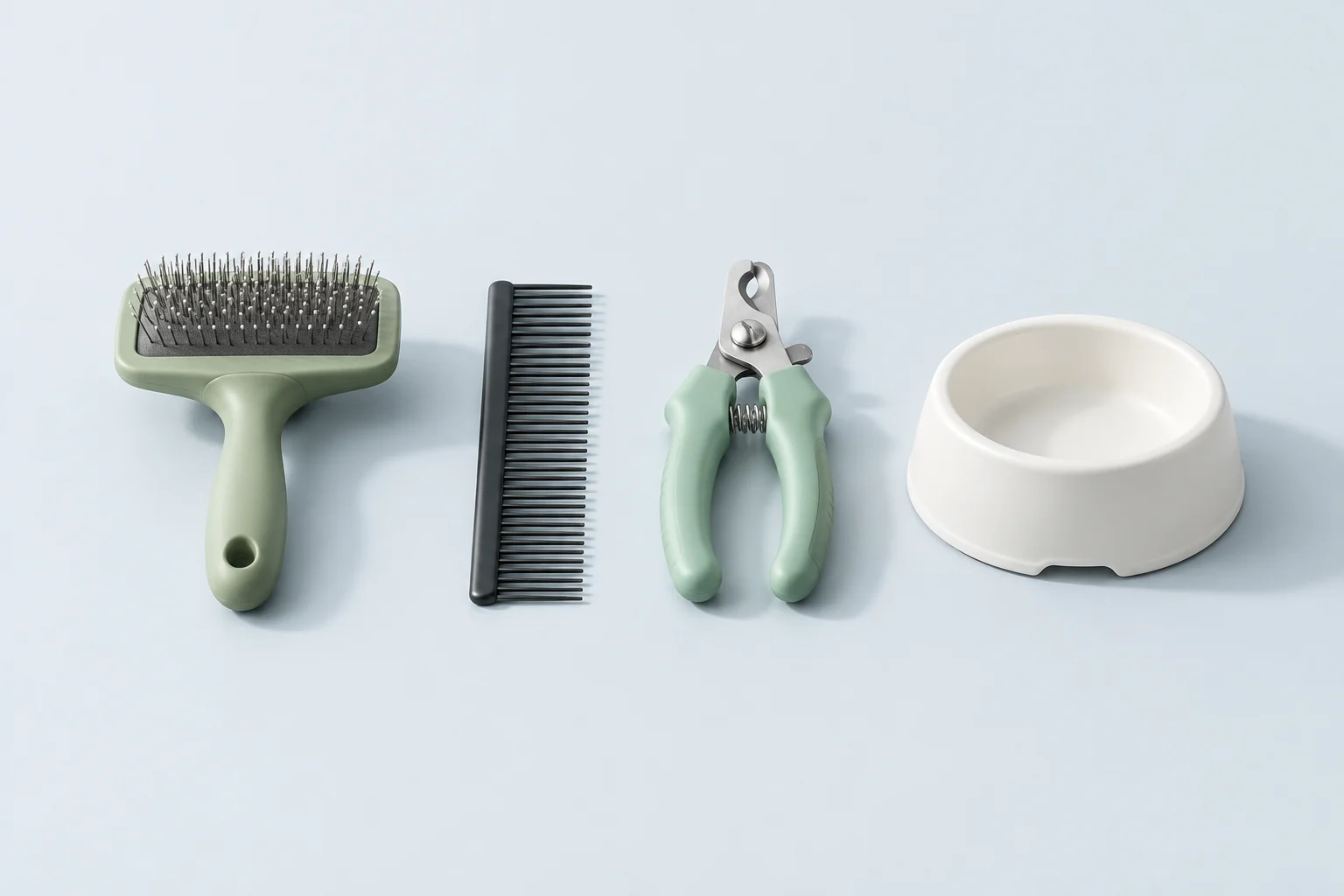
- Set composition — which tools go into a 3-, 4- or 7-piece set, and how they are laid out.
- Packaging and labelling — bags, boxes, labels, barcodes, and the printed text on them.
What decides whether it is possible
A customization is a conversation about one model at a time. The model’s own construction decides which changes are simple, which need a new part, and which are not worth doing at the quantity you have in mind. That is why we answer per model in writing instead of publishing a list of options that may not apply to the one you want.
Three things carry most of the answer: the model, the quantity, and the artwork. Where a change needs a new mould or a new print run, the quantity decides whether it is sensible at all.
What to send with the first message
- The model you are looking at — a code, a link, or a picture of the one you already sell.
- The quantity you plan per model, and whether it is a first order or a repeat.
- Your logo or packaging artwork, if it exists — vector files are easiest, but a clear image is enough to start.
- The country it ships to, because that decides packing and shipping cost.
Nothing has to be final. A first message that says “this brush, about this many, with our logo” is enough for us to answer with what is possible on that model.
Two ways to start
The two are quoted differently, so say which one you are on and the answer comes back faster.
-
OEM — the drawing is yours
You bring the drawing, the sample or an existing mould; we make to that specification under your brand.
- Drawing, sample or mould
- Mould check or change
- First article approved by you
- Production, inspection, packing
-
ODM — the design comes from us
You have a market and a price point but no model yet; start from the range on this site, or develop one to your brief.
- Brief and reference
- Structure and look
- 3D file and sample
- Tooling, production, inspection
Tooling and sample charges differ between the two, and both are stated in the quotation.
How a custom project runs
-
You send the model and the artwork
The model, the quantity you plan, the country it ships to, and whatever logo or packaging file already exists.
-
We check it against the model
Which parts can change on that one tool, which cannot, and whether a new part or a new mould would be needed.
-
We quote the version you approved
Unit price for the agreed quantity, the minimum for that version, the packing and the lead time.
-
We produce against the approved sample
The approved sample and the written specification stay on file, so a reorder starts from the same version.
Tell us the model, the quantity and the artwork
Nothing has to be final in the first message. If a logo or a packaging file exists, send it with the list and we will say what that model can carry.